Who Knew? – NASA Technology Guiding Driverless Earth Vehicles

Nissan autonomous vehicle technology is getting a boost from out of this world. The same type of software and artificial intelligence used for missions on Mars are being put to the test in Nissan vehicles here on earth.

Dr. Maarten Sierhuis, head of Nissan Research Center in Silicon Valley is applying his years of experience with NASA to lead multiple teams of researchers working on autonomous and connected vehicles. Building intelligent robots to work on Mars is similar to building a robot of Earth that drives 80 miles an hour very close to other robots.

Trick is building a vehicle system that not only knows what to do itself, but also its relationship with others on the road. Understanding how to deal with pedestrians, bicyclists, cars and animals play an important role in Nissan’s quest for zero fatalities and zero emissions.

Continue reading

Who Knew? – Eco-friendly Land Speed Record

Who knew you could mix sugar cane, volcanic ash, and nitrous oxide into a hybrid car and get a land speed record at the Bonneville Salt Flats? Hyundai did with their new Ioniq model. The Ioniq will be the first car in the world to be offered in three electrified versions. Hybrid, Electric, and Plug-in Hybrid.

With sugar cane making up 25% of the raw materials used in the door panels and using recycled plastics with powdered wood and volcanic stone to reduce the weight of some of the interior plastics up to 20% the use of eco-friendly materials is involved in the innovation.

hyundai_sugar-canehyundai_volcanic-rock

While Hyundai Motor America was testing the Ioniq they were so impressed with the results they thought they should raise the bar on the testing and pursue the new production-based hybrid land speed record.

Continue reading

Who Knew? – First Audi on the Moon

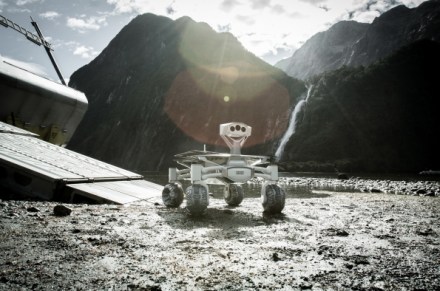
Audi lunar Quattro is preparing for a mission to the Moon. Since 2015 Audi has been working with a team led by Robert Bohme, founder and CEO of Part-Time Scientists, on developing the rover.

The lunar Quattro rover is featured in the recent sci-fi film “Alien: Covenant”. The film part is just a stepping stone towards it’s actual mission to explore the “eighth continent”. With Audi’s support, the Berlin start-up Part-Time Scientists has the goal to be the first private company to achieve a mission to the Moon.

2721-audi-rover-alien-covenant-7

Audi’s focus of the collaboration is on offering all-wheel drive expertise (quattro technology), expertise in lightweight construction, experience in developing vehicles with electric and plug-in hybrid motors (e-tron), and with design optimization for the development of the rover.

Continue reading

Who Knew? – Vegetable Steel for Car Parts

In efforts to find and use sustainable materials in the manufacturing of car parts, Ford is exploring the use of bamboo in vehicle interiors. Bamboo is strong, flexible, totally renewable, and plentiful in China and many other parts of Asia.

Bamboo is natural, eco-friendly, and regenerates easily. It can grow as much as three feet per day and can reach maturity in two to five years. Other types of tree material can take decades to mature.

Ford’s research and engineering center has been working with suppliers for years to evaluate the best use for the material that has a tensile strength better than some types of metals. When combined with plastic it makes extra strong parts. It currently performs better than other synthetic and natural fibers in a variety of strength tests.

Continue reading

Who Knew? – Audi Lighting Technology

For many years Audi has been the leader in developing automotive lighting technology. The Audi engineers work very closely with their racing colleagues on the development. The history of the development is extraordinary. Extremely high tech, who knew?

In 2003 the Audi A8 introduced “adaptive light”. The adaptive light is an Audi technology for the xenon plus headlights. A controller manages swiveling modules so that they always deliver the perfect light for urban, interurban and highway driving. It controls the range of the lights using a video camera mounted in the front of the inside mirror to recognize vehicles in front or approaching vehicles. The high beam assistant detects oncoming vehicles and towns based on their illumination and switches automatically between the high and low beams.

adaptive_light_en__details

Adaptive light can also network with the navigation system to anticipate upcoming road conditions. The navigation system can inform the light computer to activate longer range highway light while still on the on-ramp to the highway or switch on the cornering light before entering the intersection.

In 2004 LED daytime running lights were introduced. The daytime running lights are integrated into the headlights and make use of white light-emitting diodes that only consume a few watts of power. The wraparound of the LED’s highlight the vehicle design and enhance safety.

Continue reading

Who Knew? – Volvo Cargo Nets, Specialized, Handy

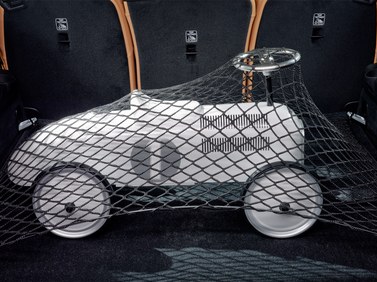
Cargo nets, nothing special right? Just some stretchy cords to hold your luggage on the roof. Well maybe that is what you will find at the auto parts store around the corner, but Volvo has a whole variety of styles and colors that may have you thinking differently about how handy these nets can be.

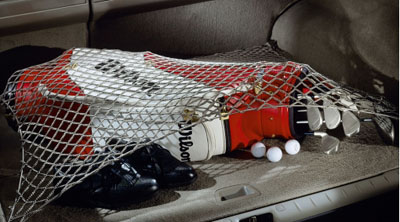
Using elastic, mesh, and fabric there are designs to hold everything from maps to drink containers to a cargo area full of sporting equipment. Not a one size fits all, but made specifically for your model and year Volvo. There are nets to fit over the pockets in the cargo area, envelope-style nets to hold grocery bags, spider nets to hold cargo to the floor, nets for the glove box door and console tunnel for ease of access to items. The list goes on and on.

Let’s look at a few styles:

X_S_V_Cargo_Net

Like a seat belt for your cargo, these elastic cords with hook and eye attachments on the floor effectively secure sports equipment, groceries, small parcels and fragile items. Available in Grey, Beige and Oak for the XC90.

Wish you had quick access to a map?

Continue reading

Who Knew? – Smart Factories

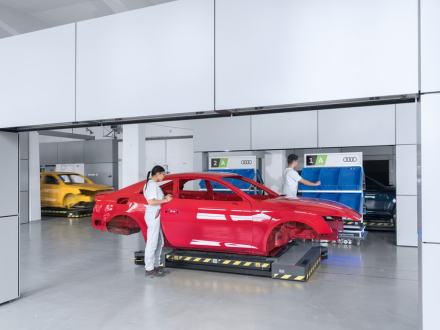
The future of vehicle production at Audi may be changing. Audi is looking into the principles of modular assembly.

Henry Ford’s idea of building cars in a rigid, sequential order is more than 100 years old and still the driving force behind mass production. Thoughts are the assembly line has served us well, but it’s outdated. Using stations instead of an assembly line, modular assembly is a more flexible way to build complex vehicles.

Audi_Dialoge_Web_17_01_Startmeup_09
Recent years have seen immense growth in the demand for many different vehicle models. Some models require more complex components than others. This forces other models on a rigid assembly line to sit idle. Using stations instead of an assembly line allows all vehicles to move to the next station with no downtime.

Continue reading

Who Knew? – New Model Car Design and Clay

In a time of sophisticated digital technology and 3D modeling what part could a few tons of clay play in the design of new car models?

Surprisingly, clay plays a big part. For over 80 years the automotive industry has used full size clay models to preview the design of a new vehicle.

Talented clay modelers continue to play a key role in new model design. For 25 years computer aided design and automated milling machines have threatened to remove this very human artistic element from the process.

mazda-modeling

With goals of lowering design costs and cutting the time from conception to final production there has been a push toward total digital design. But, when it comes to final model choices they seem to always come back to clay.

Continue reading