Who Knew? – Mazda Instills KODO in New Concept Cars

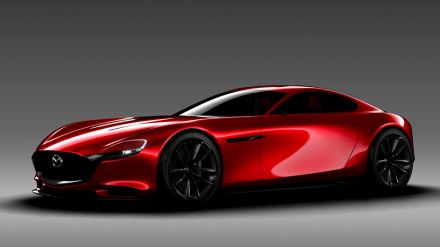
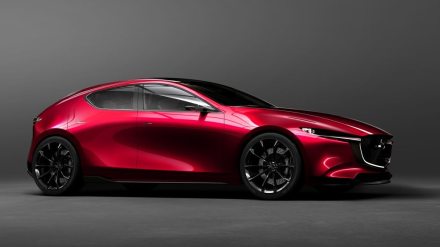
Mazda recently unveiled two concept models, the Mazda KAI CONCEPT and the Mazda VISION COUPE at the 45th Tokyo Motor Show. The new models are a continuance of Mazda’s new design philosophy: KODO – Soul of Motion. A philosophy to use design to breathe life to a car and make it more than a means of transportation or a mass of metal.
mazda_Kai_2

Mazda intends to go forward into future model designs with goal of bringing energy and rhythm to create even more elegant cars. The Mazda KAI CONCEPT compact hatchback features the next-generation SKYACTIV-X gasoline engine and advanced SKYACTIV-Vehicle Architecture. It boasts refinements in all areas of dynamic performance to produce a dramatically quieter, more comfortable ride and an enhanced performance feel. The KODO design features muscular, solid proportions and the use of reflections over the body sides to bring it to life.

Continue reading

Do You Need It? – Roof Rack Base Carrier

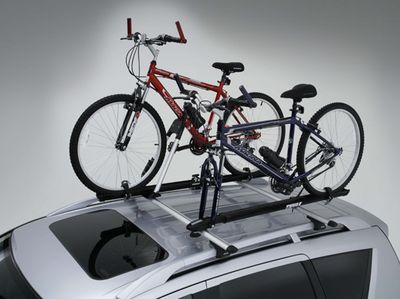
Who needs a roof rack? Well, almost everyone has had a time where they just wished there was a little more room inside their vehicle. Whether it was heading to the beach, the ski slope, base camp, or grandma’s house, using a roof rack can be a welcome addition to free up some space for additional leg room or transporting oversize loads.

mits_BikeAttachment_RoofMount_MZ314030


A genuine Mitsubishi roof rack base carrier gives you the ability to attach various carriers to your roof. A roof box or ski or bike carrier can free up interior space, but they require a roof rack to attach to. Some vehicles come from the factory with a full roof rack.

Some have raised side rails that go from front to back.


Mits_out10_accRoofRackKit-AeroBars

Some have flush side rails that go from front to back.

mits_MZ314501

These just need cross bars that attach to them and go from side to side to complete the rack.

Continue reading

Do You Need It? – Front Skid Plate

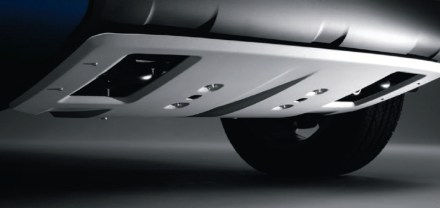
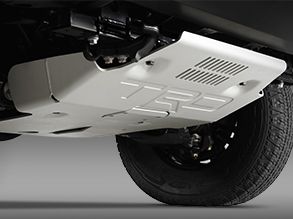
If you wondering whether you need something to protect against costly damage to your vehicle’s engine and transmission, a front skid plate might just be the ticket. Whether you are planning on off-roading or just want to be prepared for surprises in the roadway. They are designed to help protect the underbody of your vehicle from damage from flying stones, branches, ice chunks or other types of road debris.

toyota_tacoma_skid

Genuine Toyota front skid plates are constructed from a single piece of heavy duty stamped and formed silver powder coated aluminum. This material provides a uniform, durable, and high-quality finish. Rigorous CAD simulations conducted by Toyota engineers, in addition to real world testing, help to maximize protection and prevent vibration stress and noise issues. Each plate is made specifically for the year and model vehicle, so it won`t interfere with or block the cooling system, while providing cut outs for easy access to all maintenance points and vehicle tow hooks.

Continue reading

Who Knew? – Newest Car Brand Revealed – Polestar

Polestar, the Volvo Car Group’s performance brand, announced its future as a new standalone electric performance car brand. Polestar currently builds the S60 and V60 Polestar, performance road cars with over 250 developments over-and-above the standard Volvo products. It also offers Polestar Engineered performance hardware upgrades and engine software optimizations for existing Volvo products.

volvo_polestar_top

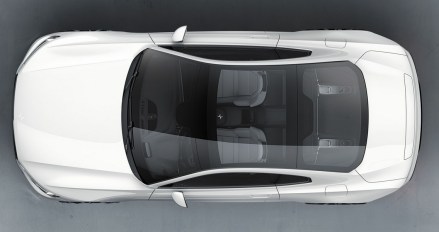
In a joint venture with Volvo’s parent company Geely, Polestar is unveiling the 600hp Polestar 1. The Polestar 1 is a two-door, 2+2 seat Grand Tourer Coupe with an ‘Electric Performance Hybrid’ drivetrain. It is an electric car supported by an internal combustion engine. At 93 miles on pure electric power alone, it has the longest full electric range of any hybrid car on the market.

Continue reading

Who Knew? – Mazda’s Sustainable Earth by 2030

Mazda has a goal to create a future in which people and cars coexist with the Earth. This long-term plan for technology development, which they are calling Sustainable Zoom-Zoom 2030, includes innovative technologies and a partnership with Toyota.

The vision includes perfecting the internal combustion engine, reducing carbon dioxide emissions, and introducing electrification technologies.

mazda_sky_engine

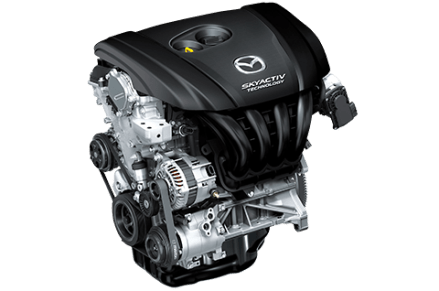
Mazda has reinvented the gasoline engine, being the first to successfully use compression ignition and a supercharger to increase engine efficiency by 30 percent and torque by 10 to 30 percent. This technology allows this gasoline engine to outperform diesel fuel efficiency while also lowering emissions.

Continue reading

Do You Need It? – Moonroof Wind Deflector

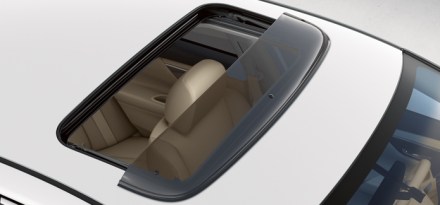
A moonroof allows you to enjoy the sunshine and open air experience. A negative to this experience is the wind turbulence, noise, and direct overhead sunlight caused by this unprotected opening.  Is there anything that might help this situation? Oh, never fear, a moonroof wind deflector is just the ticket for coping with these annoyances.

Nissan_sentra_moon

While a moonroof provides the pleasant open air feeling, it can also turn the passenger compartment into a wind tunnel complete with rushing air filled with questionable debris and a freight train level of noise that can make calm thought or conversation impossible. A moonroof wind deflector can direct much of this torrent of rushing air over the moonroof opening preventing the hair tangling and making quiet conversation possible.

Continue reading

Do you Need It? – Truck Bed Step

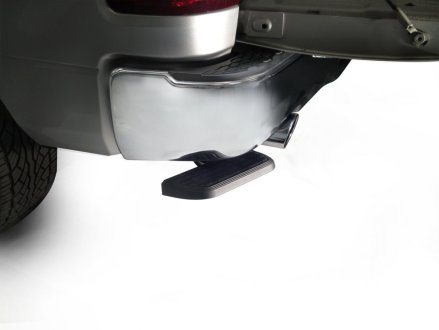
Do you really need an additional step to get access to your truck bed? No doubt it would be nice to have an easy way to reach into your truck bed, but a step stool or log round might get the job done. Well if you are looking for a simple, hands-free way to add a step up to your bed, Toyota’s BedStep might be the answer.

toyota_stump

The BedStep stows neatly under the rear bumper. When not in use it is mostly out of sight and out of the way. A spring-loaded cam allows it to flip out ready for use with the nudge of the foot. Another nudge can flip it back under the bumper when done using it. It’s unique side-angle movement provides access to the step whether the tailgate is up or down.


toyota_step_up


Continue reading

Who Knew? – Mazda Rotary Engine Lives On

Who knew? – It’s the 50th anniversary of the Mazda rotary engine. Mazda is the only carmaker to mass-produce and bring to market the rotary engine. Had it not been for the uniqueness of the rotary engine, there would probably be no Mazda. In the 1950s and 1960s, Japan’s Ministry of International Trade and Industry wanted to streamline the number of carmakers. Thinking that bigger manufacturers would be more likely to compete with US and European heavyweights, Mazda was afraid they would be vulnerable to a forced merger.

But a carmaker pioneering a bold new type of engine would be much more likely to maintain its independence. The unconventional rotary engine appealed to fans and offered a distinct reason to buy a Mazda. The successful introduction of the rotary-powered Cosmo Sport in 1967 launched Mazda as an influential carmaker.

mazda_1967-Mazda-Cosmo-Sport

Continue reading

Who Knew? – The Effects of Aerodynamics on Fuel Efficiency

Automakers have been interested in the aerodynamics of vehicle design since the 1930s. Recently the effects of aerodynamics on fuel economy have made this a bigger issue in the race to improve gas mileage. So does the shape and design of a vehicle really make much of a difference on fuel economy?

There are lots of factors to look at, but the speed of the vehicle plays a big role in the results. A formula for the coefficient of drag (how easily a vehicle moves through the air) has the force against the vehicle as: coefficient of drag x frontal area x density of air x speed squared. These forces were once physically measured in a wind tunnel, but now sophisticated computer programs can give this information based on the shape of the vehicle.

mits_cd_graph

In stop-and-go driving, aerodynamics has little effect on fuel efficiency, but at 70 mph you have four times the force working against the vehicle than you do at 35 mph. If you take away ten percent of the drag coefficient in a typical vehicle, you could improve miles per gallon by .5 mpg. In the overall scheme of things, this can be a big deal.

Continue reading