Do You Need It? – Auto-Dimming Mirror

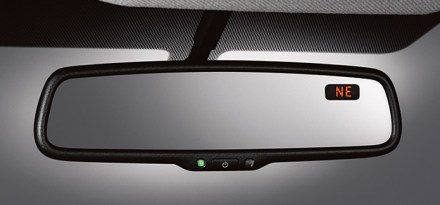
If you’ve driven at night in a vehicle with a standard inside mirror you have probably experienced the distracting glare of bright lights from a vehicle behind you. If you have a manual anti-glare feature, fumbling for the lever on the mirror to divert the sometimes blinding light can be awkward.

Great way to remove that unsafe distraction is to install an auto-dimming mirror. It will allow you to concentrate on the road while it automatically dims the light you see in the mirror. When the bright light is gone it returns to normal so you can still see detail in the view behind you. The brighter the light behind you the more the mirror dims.

Continue reading

Do You Need It? – Child Booster Cushion/Backrest

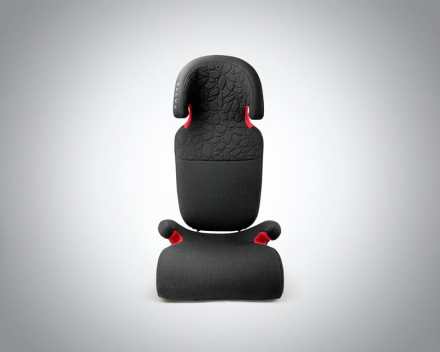
What can you get a child that is four to ten years old and weighs between 33 and 80 pounds? A pony? No silly, a super safe car seat from Volvo.

Volvo Cars was the first car maker to actively test car seats since the 1960s. They continue to be a leader in the development, testing, and correct usage of infant, child, and booster seats. While the infant and child seats are designed to be used as rearward facing, the booster seat is for forward facing children.

Teaching adults to install and operate a child seat is one thing, but getting a child to stay in the seat can be a whole different story. That is why this new generation of booster cushion and backrest are more breathable and comfortable. Besides at four years old it is important to be in style and a good looking booster is way cooler than a traditional child seat.

Continue reading

Who Knew? – Super Cruise, Cadillac’s Hands-Free Highway Driving

Cruise control technology has come a long way. Cadillac’s new Super Cruise is the industry’s first true hands-free driving technology for the highway. Early cruise controls introduced decades ago were sort of neat. Set the speed and just cruise. If you ran into traffic you had to fuss with coasting or brake and resume. With today’s traffic in many places it could be more fuss than cruise.

Super Cruise uses LiDAR-based mapping, cameras, and real-time sensors to remove the fuss and it will even give you a nudge if it thinks you are not paying attention. This real-time data and precision mapping allows control of steering, braking and acceleration.

Continue reading

Who Knew? – Volvo Auto Steering to Safety Goal

The new XC60 has a few new features to help it achieve Volvo’s goal of no one seriously injured or killed in a Volvo by 2020. The safety features are designed to provide the driver with automatic steering assistance to help avoid potential collisions.

Volvo has been working with collision avoidance systems for years and is proud of achieving a 45% decline in rear-end front collisions in Sweden thanks to their collision warning with autobrake system. They hope to achieve even better results with the introduction of auto-steering features.

There are three new features. At speeds between 31-62 mph City Safe engages when automatic braking alone would not help avoid a collision. It will provide steering assistance to avoid collision with vehicles, pedestrians, and large animals.

Continue reading

Who Knew? – Cadillac’s Talking to Each Other

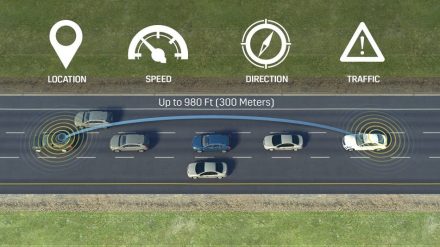
Some new Cadillac models are the first in the world to contain Vehicle-to-Vehicle (V2V) communication. The vehicles are able to communicate with other (V2V) equipped vehicles to share information to alert drivers of upcoming potential hazards.

This technology allows the vehicle to get and analyze information that is beyond the driver’s field of vision. Kind of like the ability to see through traffic and around corners. It shares vehicles’ locations, speeds, directions and traffic conditions.


cadillac_hard_braking

Cadillac uses Dedicated Short-Range Communications (DSRC) and GPS and can handle 1,000 messages per second from vehicles up to nearly 1,000 feet away. If multiple vehicles are within range it can create a network of information to alert the driver of upcoming situations giving additional time to react.

Continue reading

Who Knew? – NASA Technology Guiding Driverless Earth Vehicles

Nissan autonomous vehicle technology is getting a boost from out of this world. The same type of software and artificial intelligence used for missions on Mars are being put to the test in Nissan vehicles here on earth.

Dr. Maarten Sierhuis, head of Nissan Research Center in Silicon Valley is applying his years of experience with NASA to lead multiple teams of researchers working on autonomous and connected vehicles. Building intelligent robots to work on Mars is similar to building a robot of Earth that drives 80 miles an hour very close to other robots.

Trick is building a vehicle system that not only knows what to do itself, but also its relationship with others on the road. Understanding how to deal with pedestrians, bicyclists, cars and animals play an important role in Nissan’s quest for zero fatalities and zero emissions.

Continue reading

Who Knew? – Eco-friendly Land Speed Record

Who knew you could mix sugar cane, volcanic ash, and nitrous oxide into a hybrid car and get a land speed record at the Bonneville Salt Flats? Hyundai did with their new Ioniq model. The Ioniq will be the first car in the world to be offered in three electrified versions. Hybrid, Electric, and Plug-in Hybrid.

With sugar cane making up 25% of the raw materials used in the door panels and using recycled plastics with powdered wood and volcanic stone to reduce the weight of some of the interior plastics up to 20% the use of eco-friendly materials is involved in the innovation.

hyundai_sugar-canehyundai_volcanic-rock

While Hyundai Motor America was testing the Ioniq they were so impressed with the results they thought they should raise the bar on the testing and pursue the new production-based hybrid land speed record.

Continue reading

Who Knew? – First Audi on the Moon

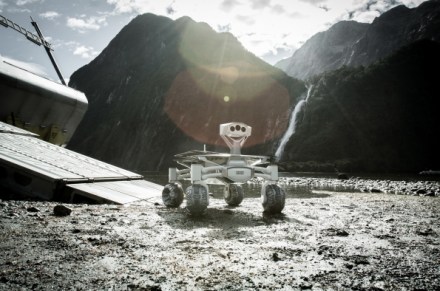
Audi lunar Quattro is preparing for a mission to the Moon. Since 2015 Audi has been working with a team led by Robert Bohme, founder and CEO of Part-Time Scientists, on developing the rover.

The lunar Quattro rover is featured in the recent sci-fi film “Alien: Covenant”. The film part is just a stepping stone towards it’s actual mission to explore the “eighth continent”. With Audi’s support, the Berlin start-up Part-Time Scientists has the goal to be the first private company to achieve a mission to the Moon.

2721-audi-rover-alien-covenant-7

Audi’s focus of the collaboration is on offering all-wheel drive expertise (quattro technology), expertise in lightweight construction, experience in developing vehicles with electric and plug-in hybrid motors (e-tron), and with design optimization for the development of the rover.

Continue reading

Who Knew? – Vegetable Steel for Car Parts

In efforts to find and use sustainable materials in the manufacturing of car parts, Ford is exploring the use of bamboo in vehicle interiors. Bamboo is strong, flexible, totally renewable, and plentiful in China and many other parts of Asia.

Bamboo is natural, eco-friendly, and regenerates easily. It can grow as much as three feet per day and can reach maturity in two to five years. Other types of tree material can take decades to mature.

Ford’s research and engineering center has been working with suppliers for years to evaluate the best use for the material that has a tensile strength better than some types of metals. When combined with plastic it makes extra strong parts. It currently performs better than other synthetic and natural fibers in a variety of strength tests.

Continue reading

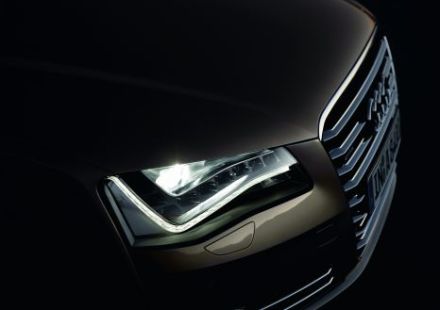
Who Knew? – Audi Lighting Technology

For many years Audi has been the leader in developing automotive lighting technology. The Audi engineers work very closely with their racing colleagues on the development. The history of the development is extraordinary. Extremely high tech, who knew?

In 2003 the Audi A8 introduced “adaptive light”. The adaptive light is an Audi technology for the xenon plus headlights. A controller manages swiveling modules so that they always deliver the perfect light for urban, interurban and highway driving. It controls the range of the lights using a video camera mounted in the front of the inside mirror to recognize vehicles in front or approaching vehicles. The high beam assistant detects oncoming vehicles and towns based on their illumination and switches automatically between the high and low beams.

adaptive_light_en__details

Adaptive light can also network with the navigation system to anticipate upcoming road conditions. The navigation system can inform the light computer to activate longer range highway light while still on the on-ramp to the highway or switch on the cornering light before entering the intersection.

In 2004 LED daytime running lights were introduced. The daytime running lights are integrated into the headlights and make use of white light-emitting diodes that only consume a few watts of power. The wraparound of the LED’s highlight the vehicle design and enhance safety.

Continue reading